
How to Stay Firm and Steady When Life is Flowing and Rushing All Around You

If you're running on adrenaline, your nervous system can't tell the difference between a work deadline and a tiger chasing you.

Both feel urgent. Both feel like threat. So your body grips. Your shoulders climb. You're clenching onto your own life without even knowing it.
I know this intimately.
It took me far too long to find what I'm about to share with you.
My Journey to This Teaching
I've been meditating and teaching yoga for over 30 years now. I'm a disciple in the lineage of Paramhansa Yogananda, and I've taught thousands of people the practices that have kept me centred.
But for years, I was still gripping.
I was still holding tension in my body even as I taught others to release it.
What I was searching for — what I finally found — was that quality of being firmly centred, grounded and rooted in my inner haven of peace, that stillness and calmness, no matter what was happening around me.
And once I understood it, I saw how powerful these simple techniques I teach actually are.
Where This Matters
I've had to give evidence in court. The breathing practice centred and calmed me before I walked into the courtroom and kept me balanced as I gave evidence.
I've used this practice through childbirth - days in labour at home and then bluelighted across town for an emergency caesarean (let's not even begin with everything that happened in the weeks after, in and out of hospital!).
I've raised children with it.
I've lived through difficult situations in my work and family life.
And most recently, I've had to rely on it completely — through a burst appendix, peritonitis, and the ongoing health challenges of CFS/ME that I'm managing now.
The techniques are simple.
You can do them quickly, easily.
But they are so powerful and so effective.
They carry us through so many different situations and circumstances in life — the ones we expect and the ones that blindside us.
That's what Path 2 is about - finding your way to stay centred and calm as life whirls all around you.
Because, as one of my mentors says
"Life won't stop lifing"
It isn't what happens to us that matters; it is how we respond to it and where we let our energy go.
The Two Qualities We're Working With This Week
In the ancient teachings — especially in the Patanjali Yoga Sutras — we talk about two qualities: Sthira and Sukha.
Sthira is steady and firm.
Think of the earth element — grounded, rooted, like a rock, like a mountain.
Sukha is soft and easy.
Think of the water element — flowing, fluid, the way water moves.
If you stand at the side of a stream and there's a rock in the middle, you watch the water flowing around it. The rock stands steady and firm. The water rushes around it, and if the rock is firmly rooted, it doesn't move with the water.
That's what we're cultivating — the steadiness without the rigidity.
The ease without the collapse.
Or think of a gorgeous dress, soft, silky material, almost fluid. But it's hanging on a coat hanger — something steady and strong — so it keeps its shape. That's your body and your skeleton. Steady and firm underneath. Fluid softness on top.
Let me tell you what 30 years of teaching has shown me works. Not theory. Not wishful thinking. Actual, lived experience.
How the Nervous System Actually Works
When you're stressed, your subconscious (which is primitive) doesn't distinguish between a massive work project and a wild animal chasing you through the woods.
Both trigger the same response in your nervous system.
It doesn't care whether a threat is a work deadline or a tiger—when your subconscious detects danger, it goes into overdrive.
Your body flips into fight-or-flight mode.
Releasing that grip is an active choice. It's a skill you can learn — and it's one of the most valuable skills you'll ever develop.
What's Actually Happening Inside
Your muscles grip onto your skeleton, ready to move it away from danger.
Blood is redirected from your digestive system to your large muscle groups—your legs, your arms, your torso.
You're being prepared to run or fight.
But here's where it gets you: without blood flow to your belly, digestion stops cold - there is no time to stop and poop when you are running from that tiger (or bear, do bears........?)
You can't eat; you can't process food. Over time, you develop digestive issues.
Your sleep suffers too—you can't rest deeply when your nervous system is primed for danger.
Your breath gets shallow.
Your jaw clenches.
Your shoulders creep up toward your ears.
Do you recognise any of those?
You start to feel trapped in your own body.
This is the grip—your muscles gripping, on autopilot, because your subconscious is still running ancient survival software.
Here's what I learned: you can't think your way out of a nervous system convinced you're in danger.
You have to feel your way back to safety.
Finding Steady and Soft
In Sanskrit, sthira means steady, firm, stable.
Sukha means soft, easy, pleasant.
In yoga, we're taught to find both at the same time—a paradox that actually describes how a calm nervous system feels.
Imagine that rock in the stream. The rock doesn't fight the water; it's solid and unmoved. The water flows around it, soft but consistent. That's what we're cultivating: your steady centre, with ease flowing through it.
Your muscles need tone to hold you upright.
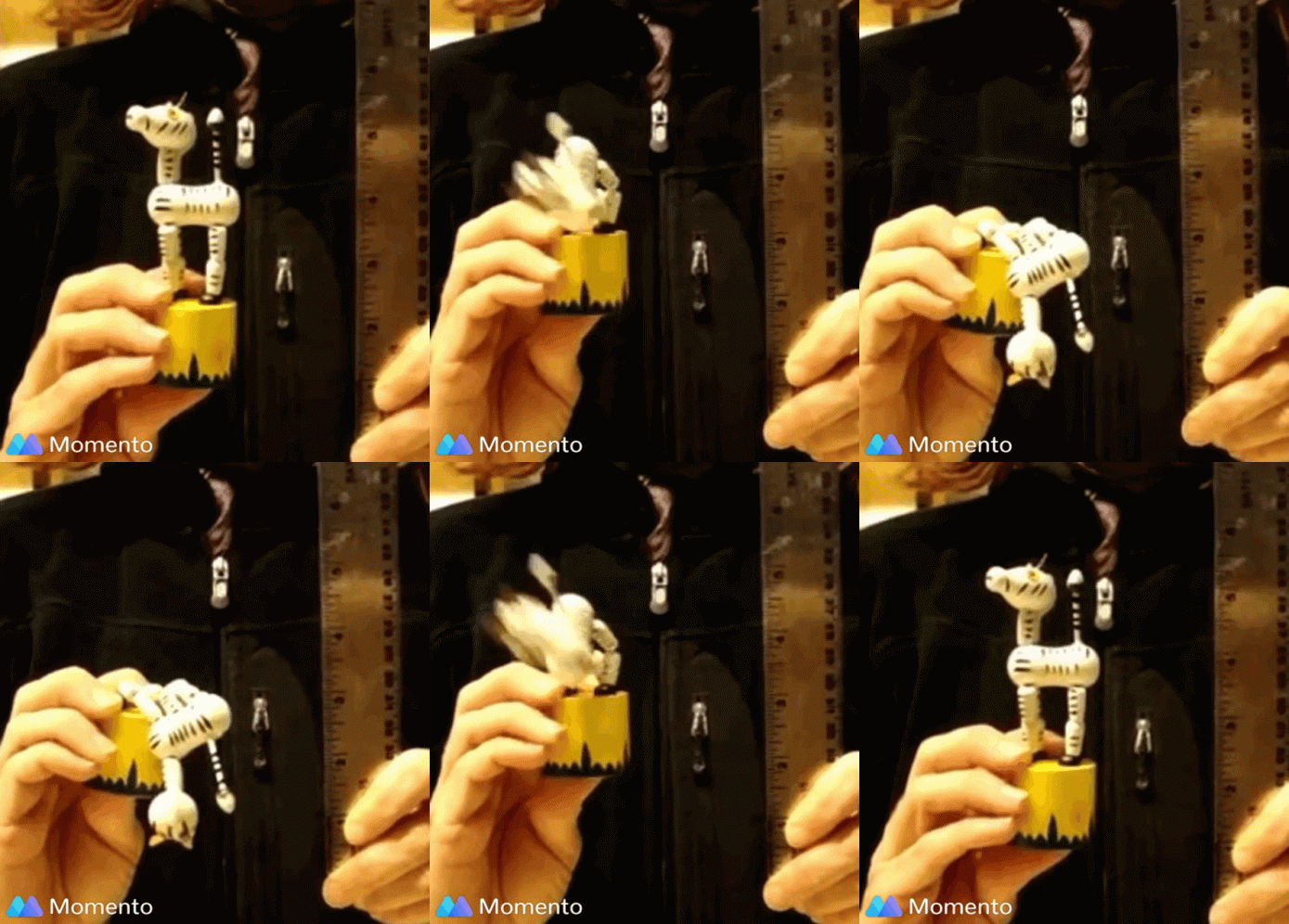
Your nervous system needs to settle so you can breathe.
Sthira-Sukha is both.
If you want to keep building this steadiness, Path 2 lives inside Soul Support. It's where I guide you through the R.E.A.L. Method, so that steady, soft centre becomes something you can find for yourself, any time, not only when someone is guiding you.
The full practice for this path is below.
If you're not a member yet, join Soul Support to step onto Path 2 and start practising this week.